


Hubzu - Real Estate Auctions
3.971.00 Reviews
App Specs
- Version
- 3.2.3
- Updated On
- License
- Free
- Downloads
- 100,000+
- Developer
- Hubzu.com
- Categories
- House & Home
- Platform
- Android
Screenshots
 Analysis by AppCompare
I approached Hubzu - Real Estate Auctions as a practical browsing tool rather than a complete home-buying service, and that distinction matters. The app is built for people who want to look through real estate auctions, foreclosure opportunities, and bank-owned homes from a phone. I found its appeal in the ability to keep property hunting close at hand, especially when I wanted to scan possibilities without sitting at a desktop computer.
It is a free House & Home app from Hubzu.com, available to everyone and compatible with Android 8.0 or later. The current release is version 3.2.3. Its audience is fairly clear: investors, bargain hunters, first-time buyers willing to learn an unfamiliar process, and anyone tracking properties that may not appear in the usual residential search routine. It is less suitable for someone who wants a simple, conventional “choose a home and arrange a viewing” experience.
How Hubzu fits into real estate auction research
The most useful way to think about this app is as an entry point into auction-oriented property discovery. Traditional property apps usually center on asking prices, neighborhood filters, photographs, and contact with an agent. Hubzu places more attention on homes connected with auctions, foreclosures, and bank ownership. That changes how I read every listing: the headline opportunity is only the beginning, not a promise that the property will be straightforward to purchase.
When I browse this kind of inventory, I am not only asking whether I like the house. I am also asking whether the location works, whether the condition could create expensive surprises, how competitive the bidding might become, and whether the purchase process fits my finances. The app is valuable because it helps surface candidates for that investigation. It should not be treated as a substitute for inspecting the property, checking local records, understanding auction terms, or getting professional advice when the transaction is complicated.
That makes the experience different from using a normal listing app. A conventional search is often designed around living in the home. Hubzu is better approached as a screening workspace. I would use it to create a shortlist, compare opportunities, and decide which properties deserve deeper research. The app can save time at the discovery stage, but it cannot remove the work that follows.
What the current version feels like in daily use
The current version, 3.2.3, presents Hubzu as a focused mobile companion for property searches rather than an all-purpose real estate platform. I found that focus helpful when I already knew I wanted auction-related listings. There is less temptation to wander through every type of conventional home listing, and the subject matter stays closer to distressed or bank-owned opportunities.
At the same time, focused inventory can make the app feel demanding. A property that looks attractive in a quick scroll may require much more investigation than a typical retail listing. The practical value comes from slowing down after the initial discovery: I would save the address or listing details in my own notes, compare it with nearby properties, and write down questions before considering any bid-related action.
Worth Reading Before You Choose

EA SPORTS FC Mobile 26 Is a Bigger Football Game, but It Takes Time

Flipboard Shows What News Apps Must Do Beyond the Feed

Switching to Android Auto Means Rethinking Your Driving Routine

Google Calendar Makes a Crowded Week Easier to Manage

Ludo King Makes the Most of the Minutes Between Plans

Baby Panda World Brings Quick Play to Modern Phones, but Its Game Library Feels Busy
The app has an average rating of 3.9 from around 260 ratings, which suggests a mixed but reasonably usable experience rather than universal enthusiasm. I read that as a reminder to keep expectations realistic. A real estate auction app is judged not only by its interface, but also by the complexity and variability of the properties it presents. Even a smooth app cannot make a risky property low-risk.
A realistic scenario for using it
Imagine I am looking for a small investment property near a city where I already understand the neighborhoods. I could open Hubzu during a commute or lunch break, scan auction-related homes, and remove anything outside my preferred area. For each remaining candidate, I would note the address, compare the apparent opportunity with nearby conventional listings, and check whether the potential discount still looks meaningful after allowing for repairs, taxes, legal work, and other costs.
The important insight is that the app works best before I become emotionally attached to a property. A dramatic price or attractive photograph can encourage rushed thinking. Instead, I would set a fixed screening routine: location first, property type second, visible condition third, and auction details before any financial commitment. This turns casual browsing into a repeatable research process.
For an owner-occupier, the same workflow can be useful, but the tolerance for surprises should be much lower. If I needed a home for my family soon, I would compare Hubzu with ordinary listings and local agents rather than assuming an auction property was the better route. A lower apparent entry price may be offset by repairs, uncertainty, or a process that does not suit a tight moving schedule.
What changed users may notice over time
Hubzu was released on June 24, 2019, and the current version shows that the app has continued to exist as a maintained product rather than remaining frozen at its original launch. I cannot turn that version number into a promise of a particular redesign or feature, but it does tell me that users are working with a later stage of the app’s life, not the first release.
For existing users, the practical effect of a current release is usually less about learning an entirely new product and more about checking whether familiar browsing habits still work as expected. I would revisit saved searches, notification preferences, account details, and any listing workflow after an update. Auction opportunities can be time-sensitive, so a user should not assume that an old routine will always surface information in exactly the same way.
The app’s reach is also notable: it has passed 100K installs. That does not prove that every user is satisfied, but it indicates that Hubzu has found a real audience beyond a tiny niche. For me, that makes it more credible as a tool to keep available during a property search, while still leaving room for a second source of information.
One useful habit for returning users is to separate app convenience from transaction confidence. I might use the phone to discover a property, but I would keep a separate checklist for due diligence. That checklist could include the address, auction timing, occupancy questions, visible damage, financing constraints, and professional contacts. Keeping those notes outside the app reduces the chance that a quick mobile session becomes an impulsive decision.
Where the experience still has friction
The biggest limitation is inherent to the subject matter: auction and foreclosure purchases are not ordinary online shopping. A listing can be interesting without being accessible, financeable, vacant, or inexpensive after all costs. The app helps me find possibilities, but it does not make the legal and financial responsibilities disappear. Anyone expecting a simple path from browsing to moving day may find the process frustrating.
Another weakness is the risk of incomplete context during quick browsing. A phone screen encourages fast comparisons, yet property decisions need detail. I would be cautious about judging condition from photographs alone, treating a displayed figure as my final budget, or assuming that a property’s auction status tells me everything important about it. The more unusual the opportunity looks, the more verification I would demand outside the browsing session.
There is also a workflow trade-off between speed and organization. Hubzu is convenient for checking opportunities wherever I am, but serious research can become scattered if I rely only on repeated scrolling. I would use a spreadsheet, notes app, or printed checklist alongside it. That is not a criticism unique to mobile software; it is simply the point where an app-based search needs to connect with a disciplined buying process.
Users should also consider their level of auction knowledge. A newcomer may recognize a promising location but miss the significance of terms, deadlines, occupancy status, or repair exposure. I would not recommend making a first auction purchase based solely on confidence gained from browsing. A local real estate professional, attorney, inspector, lender, or other qualified adviser may be more valuable than another hour of scrolling.
Who gets the most value from it
I would recommend Hubzu to a patient researcher who wants a dedicated way to discover auction, foreclosure, and bank-owned homes. It is especially useful for someone who already has a target area and can evaluate properties with a clear budget. Investors may appreciate the ability to scan potential projects, while experienced buyers can use it as one channel in a broader sourcing strategy.
It can also help a curious beginner learn what kinds of opportunities appear in this part of the market, provided the beginner treats the app as an education and screening tool. I would start by observing several listings, comparing them with ordinary homes in the same area, and recording what questions repeatedly arise. That approach builds judgment before money is involved.
I would suggest skipping it, or at least making it secondary, if I wanted a predictable purchase timeline, a polished move-in-ready home, or a single platform that handles every stage of the transaction. A standard real estate search, a local agent, or a specialist auction adviser may be a better first choice in those situations. Hubzu is strongest when the unusual nature of the inventory is part of the reason I am searching.
How I would use it more intelligently
My first tip is to create a “why this property” note before going any further. I would write down whether the attraction is location, apparent price, lot size, rental potential, or something else. If I cannot explain the reason in a sentence, I am probably reacting to presentation rather than evaluating the opportunity.
My second tip is to compare auction candidates with ordinary alternatives in the same neighborhood. A property that looks inexpensive in isolation may look much less compelling beside homes that need fewer repairs or involve a simpler purchase. This comparison is one of the app’s most important hidden trade-offs: discovery is easy, but meaningful value requires context.
My third tip is to use a two-stage shortlist. In the first pass, I would keep the filter broad enough to avoid missing an unusual opportunity. In the second, I would eliminate anything that fails my location, budget, condition, or timing rules. This prevents the common mistake of trying to perform full due diligence on every listing while still protecting me from impulsive bidding.
A fourth useful habit is to treat deadlines as prompts for verification, not pressure. If a listing appears time-sensitive, I would confirm the current status and requirements before committing attention or money. Urgency can be part of auction marketing, but it should never replace a careful check of what I am actually agreeing to.
What I would like users to watch
Existing users should watch how the current release affects the details they rely on most: search behavior, listing presentation, account access, alerts, and the clarity of auction-related information. Those are the areas where a small change can affect a time-sensitive property search. I would periodically review my process instead of assuming that an app update automatically improves every part of the buying journey.
New users should watch their own assumptions even more closely. The app may make it easy to discover a house, but discovery is not ownership. I would be particularly careful when a property appears dramatically cheaper than nearby options, because that is exactly when inspection, title research, financing review, and professional guidance become more important.
Hubzu is free and carries an Everyone content rating, so it is easy to try without treating the download as a major commitment. That convenience is useful, but the transactions it helps people investigate can be serious. I would judge the app by whether it improves my research discipline, not by how quickly it produces an exciting listing.
After using it, my view is positive but measured. Hubzu is best as a mobile discovery and screening tool for auction-oriented real estate, not as a shortcut around due diligence. I like it for keeping foreclosure and bank-owned opportunities visible while I am away from a computer, and I think it earns a place in a broader property-search routine.
I would recommend Hubzu - Real Estate Auctions to readers who are comfortable asking difficult questions and comparing several sources before acting. If that sounds like you, the app can make an unfamiliar corner of the housing market easier to explore. If you want certainty, simplicity, and a conventional home-buying path, I would start elsewhere and use Hubzu only when its specialized inventory genuinely matches your goal.
Pros
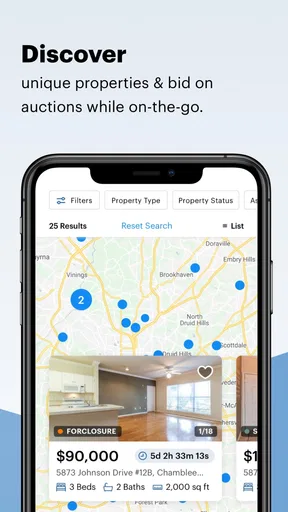
- Access to foreclosure and auction properties in one marketplace.
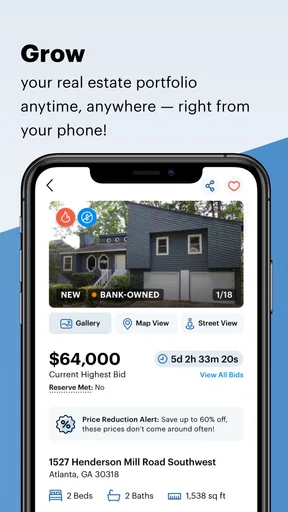
- Property listings include photos
- auction details
- and bid information.
- Saved searches help track specific locations and property types.
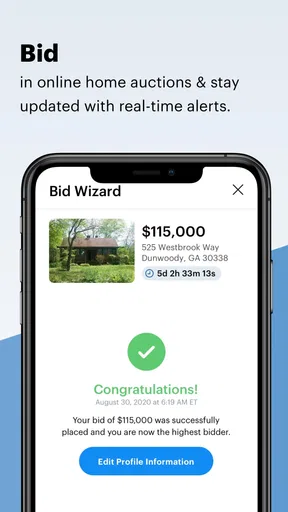
- Push notifications can alert users about listing or auction updates.
- Useful for investors seeking potentially below-market real estate deals.
Cons
- Many properties require extensive repairs or renovation before occupancy.
- Auction purchases may involve strict deadlines and limited cancellation options.
- Some listings may have liens
- occupancy issues
- or unclear property conditions.
- Bidding activity can change quickly
- making final prices hard to predict.
- Financing and closing requirements may vary significantly by property.
FAQs for Hubzu - Real Estate Auctions
What is Hubzu - Real Estate Auctions, and how does it work?
Hubzu is an online marketplace for buying residential and commercial properties through auctions and other sale formats. After creating an account, you can browse listings, review property details, check auction rules, and submit bids when eligible. Each listing may have different requirements, deadlines, fees, and seller conditions, so reading the complete property information before bidding is essential.
Do I need an account or approval before bidding on a property?
Yes, users generally need to register for a Hubzu account before participating in an auction. Depending on the listing, you may also need to verify your identity, provide contact information, accept the applicable terms, or submit bidding documentation. Some properties can require proof of funds or a deposit, so approval and eligibility should be confirmed for each individual auction.
Are Hubzu properties sold as-is, and can I inspect them before bidding?
Many properties listed on Hubzu are sold as-is, which means the buyer may be responsible for evaluating the condition, repairs, occupancy, title concerns, and other potential risks. Inspection availability varies by property, and access is not always guaranteed. Before placing a bid, review disclosures, arrange a permitted inspection when possible, and consider obtaining professional legal or real-estate advice.
What additional costs should I expect when buying through Hubzu?
The winning bid may not represent the total amount you will pay. Depending on the property and transaction terms, additional costs can include buyer premiums, platform or administrative fees, deposits, closing costs, taxes, insurance, title services, financing charges, and repair expenses. Carefully review the listing’s purchase agreement and fee disclosures, because charges and payment deadlines can differ significantly.
What happens if I win an auction on Hubzu but cannot complete the purchase?
Winning a Hubzu auction can create binding obligations under the listing’s terms and purchase agreement. If you fail to submit required documents, pay the deposit, or close on time, you could lose deposited funds, face additional penalties, or be subject to legal action, depending on the sale conditions. Never bid casually; confirm your financing, budget, timeline, and eligibility before submitting an offer.


